
After more than forty years in Japan, I have seen one pattern repeat across industries.
Japan values precision in its rules, yet the systems needed to meet those rules often take much longer to arrive.
The result is something anyone building a business here eventually learns to navigate: a quiet world of “almost compliance.”
Companies do their best. Regulators do their best. But until clarity arrives, business is conducted in the gray space between ideal regulation and real conditions.
It is not laziness. It is not resistance. It is simply how Japan stays functional in a system that changes slowly even when the world moves quickly.
When Good Intentions Meet Real Conditions
Japan’s rules are created with serious intent. They aim to eliminate risk, protect consumers, and anticipate every scenario.
But when a rule is written for a perfect world and delivered to an imperfect one, companies usually take the only practical path available:
Interpret the rule as reasonably as possible, document everything, and keep operating.
This is “almost compliance.”
Examples We See Today
1. The CBN Dilemma
CBN is a minor cannabinoid that forms naturally when THC oxidizes. It can cause intoxication at high doses, but trace amounts in CBD extracts have no measurable effect.
Authorities are now considering placing CBN under a controlled substance framework — not because of CBN itself, but due to poorly regulated, high-dose products.
If banned without ppm allowances, Japan would create a rule responsible producers can’t meet — and businesses would default back to “almost compliance.”
2. Food Labeling and Ingredient Rules
Japan mandates labeling for 8 allergens. 20 others are voluntary — but large retailers often require all 28. This causes confusion and over-compliance in practice.
New allergen mandates are expected, but details remain unclear — forcing companies to print multiple versions of packaging and risk costly waste.
3. Workstyle Reform and the Return of Long Hours
Strict overtime rules were introduced — but now politicians are signaling exceptions for industries like logistics and caregiving.
Companies must follow rules that may soon be revised — while regulators enforce the current framework.
4. Digital Transformation That Still Needs Paper
Japan declared hanko and paper obsolete — but many ministries still require both.
Even buying a hanko ink pad required visits to three stores. This is transformation at Japan’s pace — slow but steady.
5. Immigration Rules That Lag Behind Reality
Visa categories don’t reflect modern startup or remote work realities.
For example: the Business Manager Visa was abused for residency, leading to tightening — but no structural alternative has appeared yet.
Why This Happens
“Almost compliance” is not failure.
It is a system that allows Japan to adapt incrementally, without destabilizing what already exists. Harmony over confrontation, consensus over disruption.
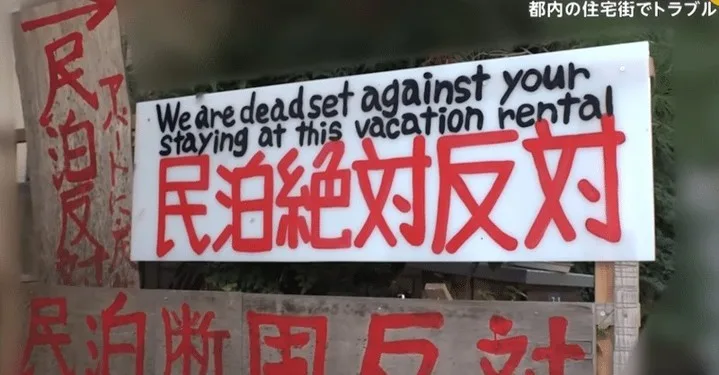
Perhaps the clearest example of “almost compliance” in recent years was Airbnb. Before Japan formally legalized private rentals in 2018, thousands of listings operated in a gray zone — tolerated but unapproved. When new rules hit, Airbnb had to remove nearly 80% of its listings overnight. Compliance came late, and the cost was enormous.
Why Understanding This Matters
Foreign companies often become frustrated when guidance changes or interpretations differ. But this is not dysfunction — it’s Japan’s version of gradual evolution.
Success here comes from flexibility, documentation, and a willingness to adapt — even when the path forward isn’t fully defined.
Looking Ahead
There will be long stretches when “almost compliance” is the only practical path forward.
Understanding this reality is essential for anyone who wants to navigate Japan successfully.
At Japan Startup Advisory, we’ve helped companies operate in this gray space — while staying ready for what’s next.